
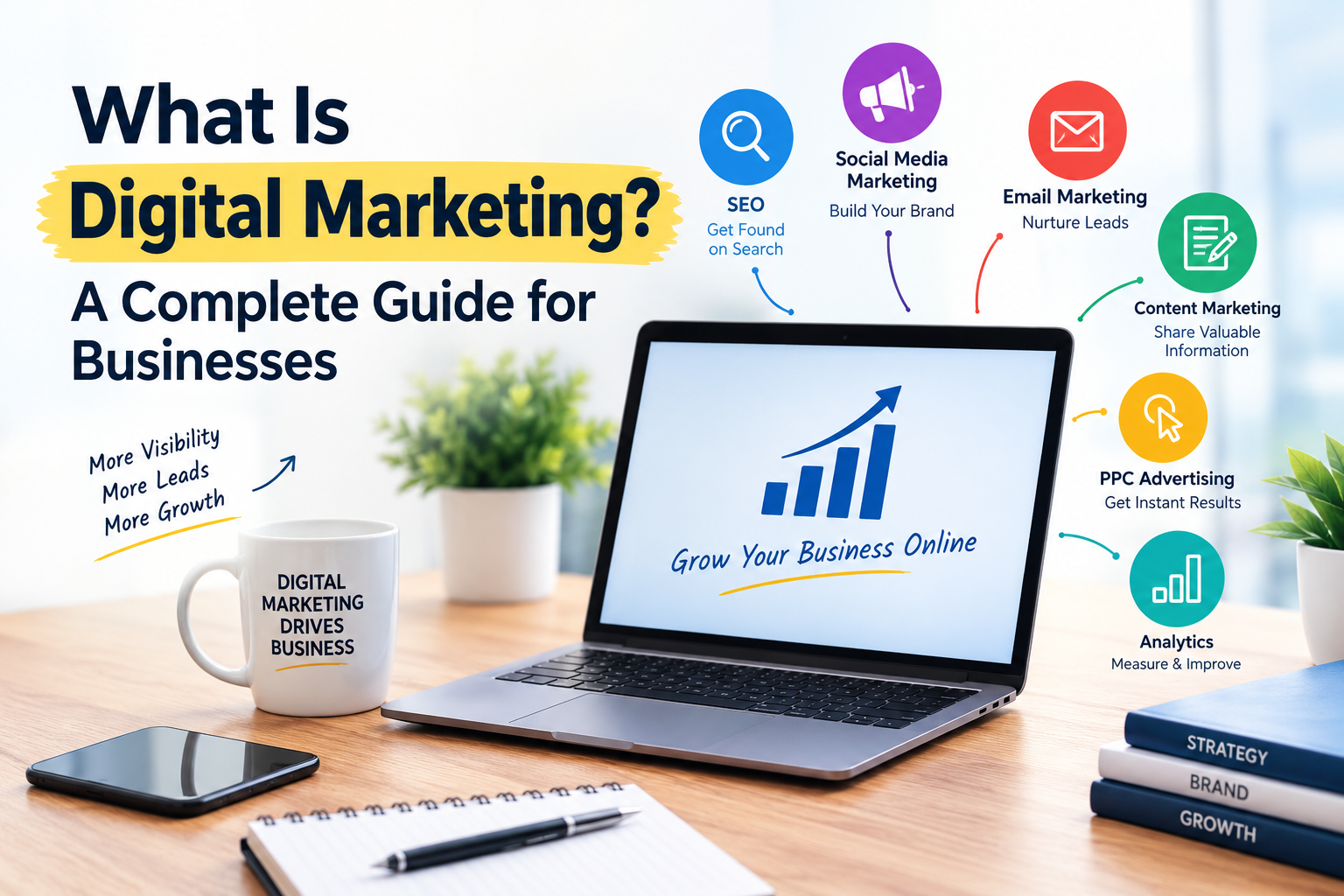
What Is Digital Marketing?
Digital marketing involves connecting and communicating with potential customers through online platforms and digital channels.
Businesses can use different digital marketing channels depending on their marketing goals and target audience. For example:
-
SEO (Search Engine Optimization) helps increase website visibility on search engines.
-
Social Media Marketing helps build brand awareness, engagement, and customer relationships.
-
Content Marketing uses blogs, videos, guides, and other content to educate and engage audiences.
-
PPC Advertising and Google Ads can help drive targeted traffic to a website.
-
Email Marketing can help businesses communicate with existing customers and improve customer retention.
-
Lead Generation strategies help businesses attract potential customers and turn them into prospects.
The ultimate goal of digital marketing is not simply to build an online presence. It is to reach the right audience, generate meaningful engagement, and convert potential customers into paying customers.
Major Types of Digital Marketing
|
Digital Marketing Type |
Main Purpose |
Example |
|
SEO |
Increase organic visibility and search engine rankings |
Google Search |
|
Social Media Marketing |
Build engagement, brand awareness, and reach |
Instagram, Facebook, LinkedIn |
|
Content Marketing |
Attract, educate, and engage customers |
Blog posts, videos |
|
PPC Advertising |
Reach potential customers through paid advertising |
Google Ads, Display Ads, Remarketing |
|
Email Marketing |
Build relationships, improve retention, and encourage purchases |
Email campaigns, newsletters |
|
Local SEO |
Attract local customers and generate local leads |
Google Business Profile |
|
Affiliate Marketing |
Generate customers through affiliate partnerships |
Referral links |
Combining different digital marketing strategies can help businesses build brand awareness, improve online visibility, engage customers, and achieve their marketing objectives.
How Does Digital Marketing Work?
The digital marketing process generally follows the buyer journey, which can be divided into five key stages:
Awareness → Interest → Consideration → Conversion → Retention
1. Awareness
At the awareness stage, businesses introduce their brand, products, or services to potential customers. Businesses can use SEO, Google Ads, social media marketing, video marketing, and content marketing to reach their target audience.
2. Interest
Once customers become aware of a business, they may visit its website, social media profiles, or other online platforms. At this stage, businesses should provide useful and engaging information that encourages customers to learn more.
3. Consideration
During the consideration stage, potential customers compare products, services, prices, reviews, and alternatives before making a decision. Providing valuable content, clear information, customer reviews, and easy communication can help businesses build trust.
4. Conversion
The conversion stage is when a potential customer takes a desired action, such as making a purchase, filling out a form, booking a service, or contacting the business.
Businesses can use conversion rate analysis to measure how effectively different digital marketing channels are generating leads, sales, or other desired actions.
5. Retention
Digital marketing does not end after a customer makes a purchase. Businesses can use email marketing, remarketing, social media, and valuable content to maintain relationships with existing customers and encourage repeat purchases.
Importance of Digital Marketing
Digital marketing can benefit businesses in several important ways.
1. Increase Reach
Unlike traditional methods such as newspaper advertisements or local banners, digital marketing allows businesses to reach customers beyond their local area and potentially connect with audiences worldwide.
2. Target the Right Audience
Businesses can target specific audiences based on factors such as location, age, interests, online behavior, and other characteristics. This can help businesses deliver more relevant marketing messages to potential customers.
3. Generate Potential Customers
Businesses can use landing pages, website links, social media campaigns, advertisements, and lead generation forms to encourage potential customers to visit their websites and take action.
4. Analyze and Optimize Performance
One of the major advantages of digital marketing is the ability to measure campaign performance. Businesses can analyze website traffic, engagement, leads, conversions, and other metrics to understand what is working and optimize future campaigns.
5. Build Long-Term Brand Awareness
Consistent activities such as SEO, blog publishing, video marketing, and social media updates can help businesses improve their online visibility, establish credibility, and build long-term brand awareness.
Digital Marketing vs. Traditional Marketing
Traditional marketing generally includes channels such as newspapers, magazines, billboards, radio, and television.
Digital marketing, on the other hand, uses online channels such as search engines, websites, SEO, social media platforms, email marketing, and online advertising.
One of the key differences is that digital marketing provides businesses with more opportunities to track user engagement and campaign performance. Businesses can use this data to understand consumer behavior and optimize their marketing activities.
However, there is no single marketing approach that works for every business. The right strategy depends on factors such as the products or services being offered, the target audience, budget, and overall marketing objectives.
In many cases, businesses can combine both traditional marketing and digital marketing to create a broader marketing strategy.
Final Thoughts
Digital marketing is an essential part of modern business growth. By using SEO, social media, content marketing, Google Ads, and other digital channels, businesses can reach their target audience, build brand awareness, generate leads, and strengthen their online presence for long-term growth.